


Narrative, Environment, Prop, and Puzzle Design
Outbreak was an older room, designed to be a CDC facility that housed a cure for an apocalyptic virus. It was a high difficulty game that appealed to experts, but lacked decoration. Marketing it was difficult, and it consistently underperformed. I pitched a Halloween variant- “Zombie” Outbreak. The negative space was covered with blood, the lighting was lowered, and the room’s soundtrack was replaced with a moody synthwave track. The room consistently sold out, a complete reversal of its previous performance.
After two strong Halloweens, we decided to keep the room’s Zombie theme throughout the year. The name Outbreak ‘95 gave us a chance to add new elements that evoked the technological surge of the Nineties. Soon, we added a Gameboy game running on original hardware and a PC that ran a Python variant of the classic Eliza chatbot.
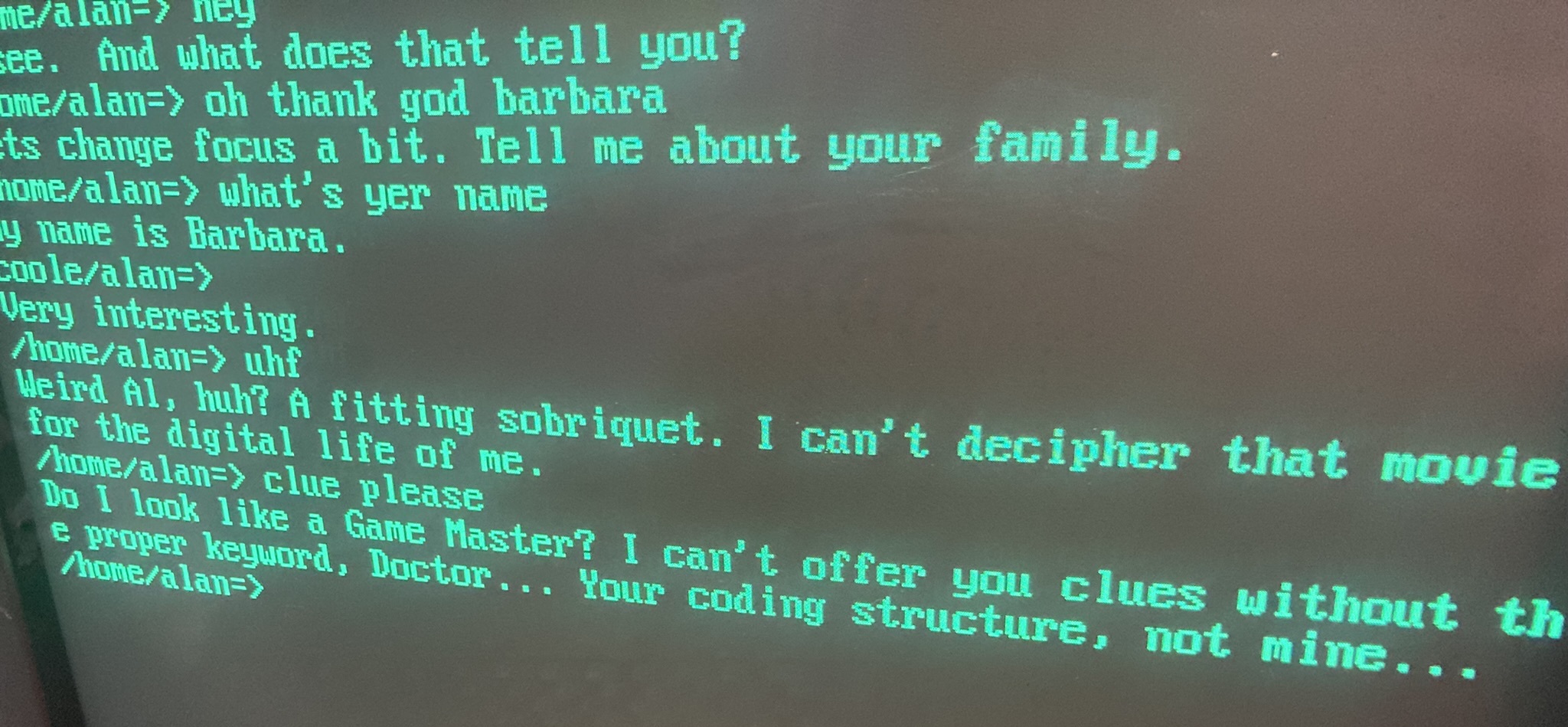 Eliza (named Barbara in-game) reacted to posters in the room and shot down any attempts at an easy hint.
The chatbot came first. I spent days diving into the script and added keywords that players could spot in the room- the script began with terms like “Zombie,” and “Virus,” and ended with exact terms from the puzzles, as well as references to the other characters who worked in the lab. Noting what testers typed in gave me even more keywords for her to respond to. She hated foul language and ignored direct attempts for answers, but gave depth to the other props in the room.
Outbreak is very intricate and well architected - so much to a point that the custom gameboy component in the room is hands down one of the most unique additions to an escape room I've ever seen.
— Rich B, Google Review
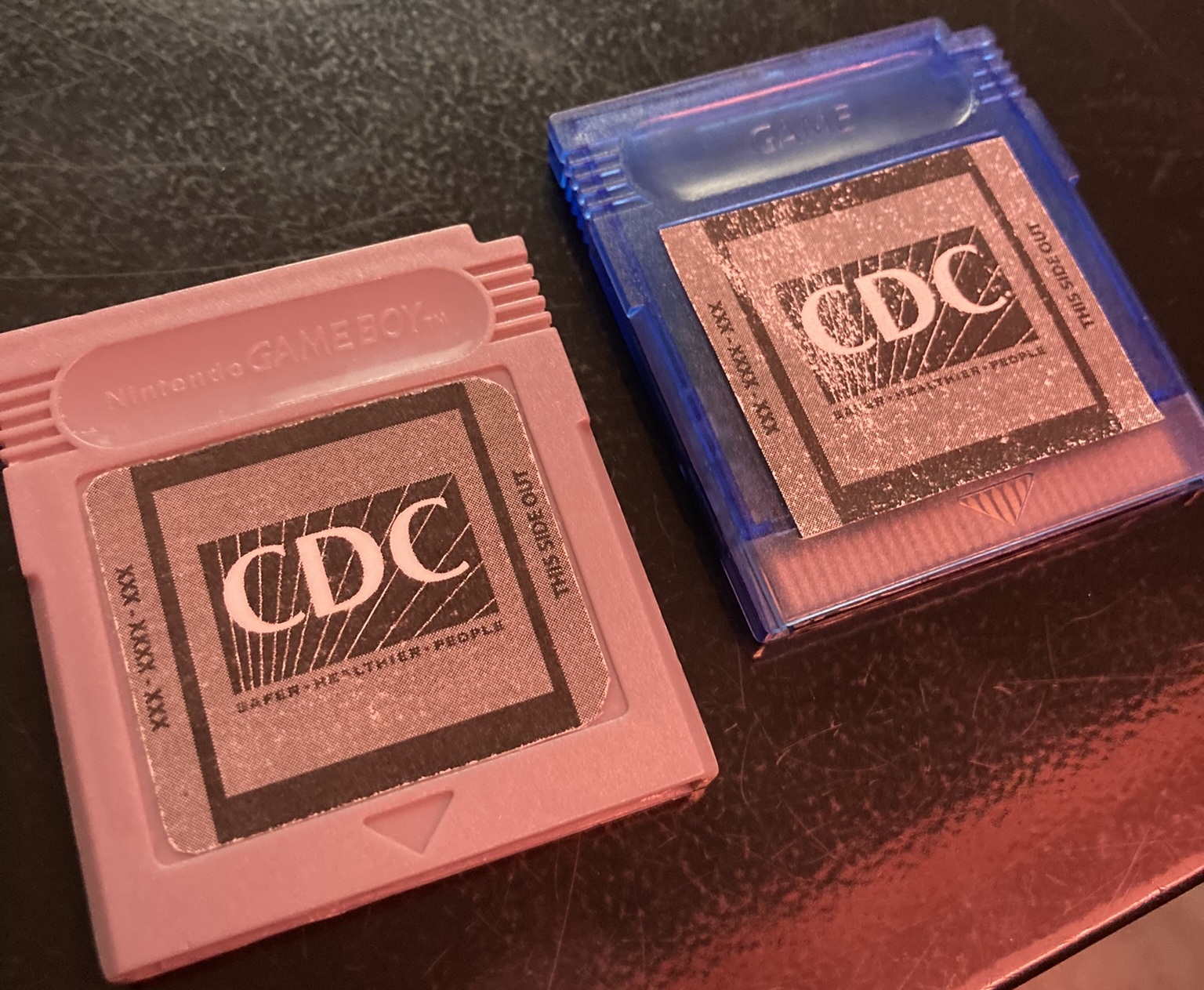 Ooh, the CDC released a limited edition transparent blue cartridge!
I realized that with Eliza, we could do two things- add more references to the other characters in the game, and reward players who asked about them with hints about other puzzles. “Eric” would return “Your partner, Dr. Eric Hill? A smart man… but prone to distraction. Why does he insist on taking notes with a video game cartridge? I don’t think a ‘secret code’ is an effective security measure, either…”
The Gameboy was a strange addition, but it was one that resonated with players. A previous attempt at a Nineties device, a cassette deck, was scrapped after players damaged it within hours- but with the Gameboy, there was an odd reverence. Players would pass it around, keep it on to hear the soundtrack, and read through Dr. Hill’s notes and journal entries. Like Eliza, Dr. Hill had a puzzle attached, but he also would comment on other corners of the room. One of our earliest escapes had taken notes from Dr. Hill and Eliza, and had used their hints to help solve the other puzzles and riddles- the game master didn’t need to send a single hint to them.
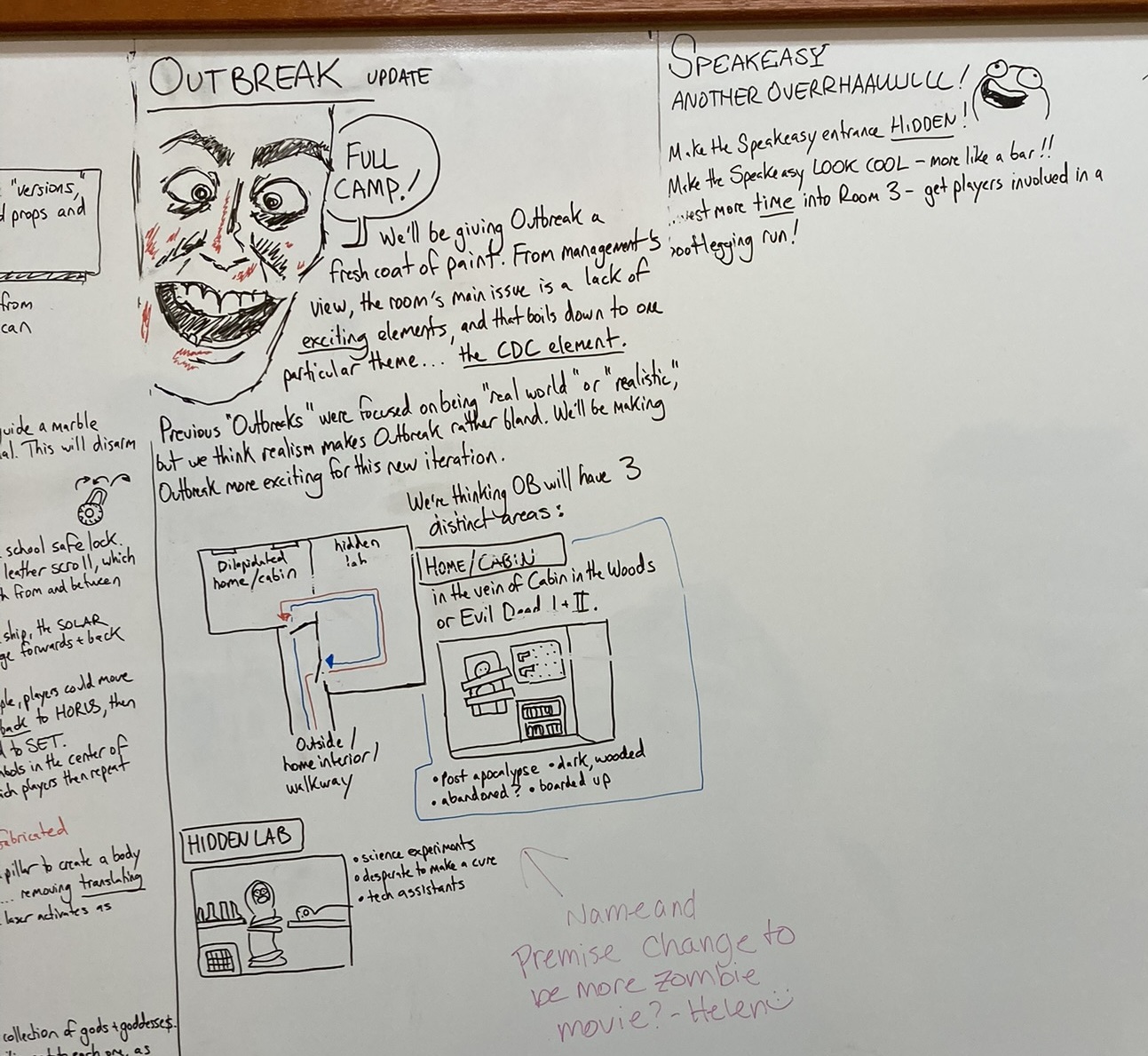 Notes on theming and layout. Helen was on-point, as always.
This was the most interesting element of the update- the addition of narrative elements that weren’t mandatory. By adding them, we created an escape room that offered multiple kinds of rewarding play. Players could focus either on the logical answers, or they could dive into the text to understand more about the purpose of the puzzles, often to get hints for future brainteasers. Players would split up, investigate different corners, then re-group with different perspectives. Often we design escape rooms so players have to do a task- rarely do we get to engender open thinking across the entire experience.
I’ll never forget a game I hosted when a teenager asked me more about what happened to the characters. He had read every entry and had been talking to Eliza. Alan was pushed as the hero of the room- his corpse, dressed in a hazmat suit, hands players an important key. But Dr. Hill’s remains were nowhere to be found. Asking players to wonder why something was absent in a room is an incredibly difficult task. In the shadow of the heroic Dr. Williams, I wrote Dr. Hill as a coward- and very few realized that he had abandoned his duties. But the fact that someone had figured it out meant a lot to me. These are the connections I strive to develop.
We did the virus outbreak scenario for a teambuilding event. Everyone raved about how fun this was, it far exceeded expectations even for a bunch of engineer dorks. The game was brilliantly designed, the puzzles were very challenging but not frustrating.
— Jeremy Smolik, Google Review